
Mediterranean islands face a unique set of waste management challenges: geographical isolation, limited land availability, sensitive ecosystems, and the high costs of transporting waste off-island. Seasonal surges in tourism add further strain, pushing infrastructure designed for small resident populations to the limit. With scarce space for landfills and heightened risks to natural habitats, effective waste management becomes both more urgent and more difficult. Financial and technical limitations, regulatory gaps, and uneven levels of public awareness compound the issue. The need for tailored, resilient, and sustainable island-specific waste strategies has never been greater.
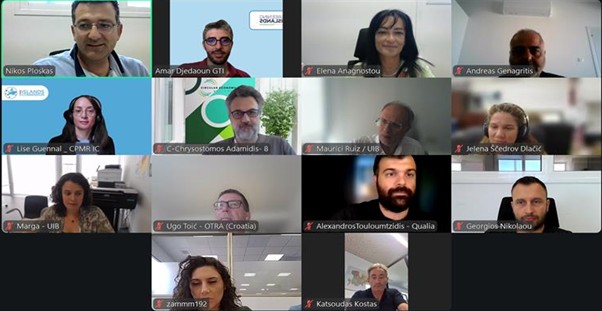
EcoMedIslands is a Strategic Territorial Project under the Interreg EuroMed “Greener MED” priority that will investigate how making waste prevention the first and foremost step in the waste hierarchy can enable Mediterranean islands to develop more sustainable, resilient systems. Running over 45 months with a budget of nearly €4 million and partnering with regions in Greece, Croatia, Italy, Cyprus, Spain, France, and Malta, the project focuses on reducing waste at source, improving reuse and recycling, deploying real‑time monitoring technologies (IoT sensors), optimizing collection routes via AI, and mobilizing public awareness and community engagement.
By combining prevention, technology, and behaviour change, Mediterranean islands can protect their environments, cut costs, and create scalable, context-specific waste solutions.
Why Data and Monitoring Matters
In the complex context of island waste management, data is not a luxury, it is essential. Accurate monitoring provides the foundation for understanding waste generation patterns, including per capita volumes, composition, and seasonal or spatial variations, enabling targeted interventions. Technologies such as real-time bin sensors and AI-optimized collection routes can significantly enhance operational efficiency, reducing unnecessary trips, fuel use, and emissions. Data also aids in identifying illegal dumping hotspots, particularly in remote areas where traditional monitoring is difficult. Furthermore, qualitative insights from local communities help design more effective public engagement and behaviour change strategies. Ultimately, standardized data enables evidence-based policymaking, facilitates knowledge sharing across islands, and attracts investment by demonstrating measurable impact and scalability.
EcoMedIslands is offering strong potential by integrating key elements of effective waste strategies identified in past initiatives. Its promise lies in the synergy between technology and behaviour change; combining IoT sensors, AI-driven route optimization, and source reduction with awareness campaigns to achieve greater impact than any single approach could deliver alone. The project’s diverse pilot sites across multiple Mediterranean islands provide a valuable testing ground, offering insights into what works across different geographic, infrastructural, and policy contexts. Its emphasis on transnational collaboration and a shared digital platform enhances the potential for scaling, allowing for the exchange of data, metrics, and best practices. If successfully implemented, EcoMedIslands could also deliver broader environmental and climate benefits, such as fewer truck journeys, improved recycling rates, reduced pollution, and lower emissions.
The ambition is clear: less waste, fewer trucks, lower emissions and replicable solutions that Mediterranean islands can adopt and adapt.
Islands are at a hinge point. Their beauty and culture risk being overwhelmed by waste, yet their scale and community ties position them as leaders of change. If Mediterranean islands can master waste reduction, reuse, recycling, monitoring and community involvement, they can set the standard for sustainable waste systems worldwide.
EcoMedIslands aims to make this vision a reality: less waste, fewer trucks, lower emissions and replicable solutions tailored for island contexts.
Kick-off in Gozo
The project will be officially launched at the EcoMedIslands kick-off meeting, hosted by EcoGozo during the 10th GTI International Conference, 28–31 October 2025 in Gozo, Malta. The event will gather public institutions, private innovators, researchers, universities, financial actors, and civil society for a high-level exchange on integrated island solutions.
EcoMedIslands: Advancing Prevention, Elevating Waste Management in Mediterranean Islands